
When a commercial roof fails, the fastest path to a durable fix is not the first quote—it is the clearest work scope. Royal Roofing & Siding NYC operates out of 605 W 42nd St PH1A, New York, NY 10036, and answers calls at (212) 457-1331. The company’s customer record shows a 4.9 from 92 reviewers, which is a useful starting point, but the real decision comes from how the contractor documents what will be repaired, what will be replaced, and what will be left alone.
This guide walks through seven inspection-and-quote questions to reduce risk in roof repair and roof replacement projects in New York’s wind-and-storm cycles, where moisture and freeze impacts can reveal themselves weeks after a “dry” day.
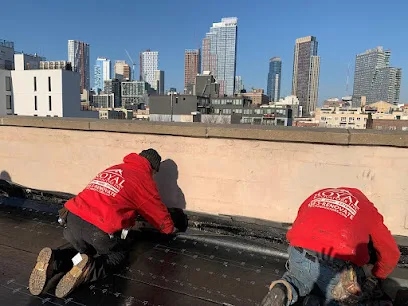
1) Confirm the roof type and damage pattern before anyone prices a “roof job”
Commercial roofs are not all evaluated the same way. Ask which roof system is being addressed (for example, flat roof assemblies versus sloped sections), and request that the inspector describe the damage pattern—blistering, splits at seams, failed flashing, or wind-lifted edges. A good quote should reference the findings, not just the end result.
For Royal Roofing & Siding NYC, the practical starting point is to tie the estimate to the calling reason: roof repair, roof inspection, wind damage, and related exterior scopes. If the contractor can’t connect the line items to what was found during the roof inspection, that mismatch is where budgets and timelines start to drift.
2) Ask for a written breakdown: diagnosis, materials, labor, and follow-up
Royal Roofing & Siding NYC callers should expect a quote that separates major phases into distinct line items: diagnosis/testing, removal and deck prep (if applicable), new membrane or shingle work, flashing and penetrations, and any closeout follow-up. When the contractor bundles everything into a single round-number figure, the building owner loses leverage to verify completeness later.
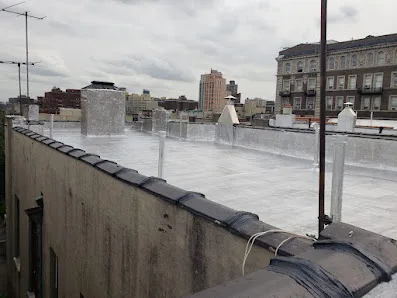
3) Verify the exact warranty terms that match the roof system
Roof replacement and roof repair warranties vary based on materials and installation procedures. Ask which warranty applies to workmanship versus materials, what the coverage period is, and whether the warranty is conditioned on maintenance or documentation of the installation.
Because warranty language can be buried in paperwork, request the warranty details in writing and keep them with the contract. For New York commercial property owners, the goal is simple: ensure the warranty matches what will be installed, and confirm how future inspections should be handled.
4) Make sure flashing and penetrations are included—most leaks come from the details
Wind-driven water intrusion often begins at flashing edges, roof vents, skylight curbs, drains, and any roof penetrations. Ask the estimator to confirm that flashing replacement or re-sealing is part of the scope where needed.
A repair plan that addresses only “surface patching” without specifying flashing, curb details, and transition points tends to underperform after the next rain-and-wind event. Ask what will be inspected around every penetration and transition.
5) For wind damage, confirm how they document wind-lift and edge conditions
Royal Roofing & Siding NYC highlights wind damage among its service areas. For wind-driven issues, request photos or a roof report that documents edge conditions, uplift indicators, and whether fasteners, underlayment, or base layers need replacement.
Even if the final repair looks clean from street level, the decision should be supported by on-roof evidence. When the contractor provides documentation, it is easier for property managers to evaluate whether the scope matches the claimed cause.
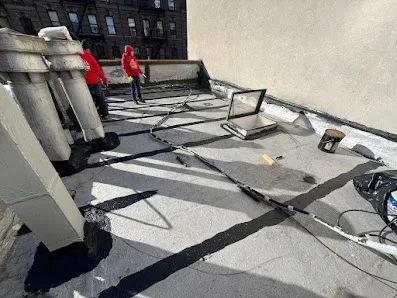
6) Clarify insurance-claim support and the responsibilities timeline
Commercial owners often need repairs aligned with insurance schedules. Ask whether Royal Roofing & Siding NYC provides insurance claim support and, more importantly, what documents the contractor supplies (roof condition summaries, itemized scopes, and any inspection notes). Also confirm which steps depend on the property owner versus the contractor.
When a contractor’s dispatch conversation promises one outcome but the paperwork supports another, projects stall. A clear responsibility timeline keeps inspections, approvals, materials ordering, and installation dates from colliding.
7) Request emergency tarp coverage rules if the roof is actively leaking
If water intrusion is ongoing, ask about emergency tarping procedures: how quickly coverage can be installed, what the tarp protects, and what the next step is after temporary stabilization. Emergency tarp work should be treated as a short-term bridge to a complete repair or replacement, not as a permanent solution.
For urgent conditions, building owners should also confirm where temporary protection is placed and how interior monitoring will be documented while the repair crew schedules final work.
Quick decision signal: the best quote answers “what will change on the roof?”
Royal Roofing & Siding NYC is listed with direct contact at (212) 457-1331 and an address at 605 W 42nd St PH1A in Midtown Manhattan. With a 4.9 rating from 92 reviewers, the business has a visible track record, but the highest value step is still the same: require a quote that explains how the roof will be different after the job is done.
If the estimate ties findings to specific repairs, names the warranty coverage approach, and includes flashing, penetrations, and documentation for wind damage, the project is more likely to hold up through the next storm cycle.
For more service details, visit the official website at roofernyc.com.